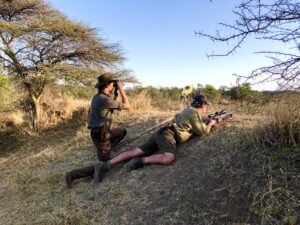
Jagt som naturbevarelse – et indlæg om ansvar, virkelighed og værdien af jagt
For mig har jagt altid været en naturlig del af livet. Jeg tog jagttegn som 15-årig, men allerede før det brugte jeg det meste af min tid ude i naturen.


For me, hunting has always been a natural part of life. I earned my hunting licence at the age of 15, but even before that I spent most of my time outdoors. Back then, it was mainly about the experience itself, being in nature, the excitement, and the fascination with wildlife. It was only later that I truly began to understand what hunting can also be.
By Thor Schmidt
The major turning point came when I travelled to South Africa and ended up working for Mark Ivy Safaris as a Professional Hunter in the Limpopo Province. I worked on the property during several extended stays, which eventually led me to complete the demanding PH qualification, including shooting tests, tracking assessments, trophy evaluation examinations, and extensive theoretical training.
Working in Africa for longer periods was an incredible experience, but it was also an eye-opener. It was there that I truly began to understand hunting’s role in a much broader context, particularly as a tool for wildlife and habitat conservation.
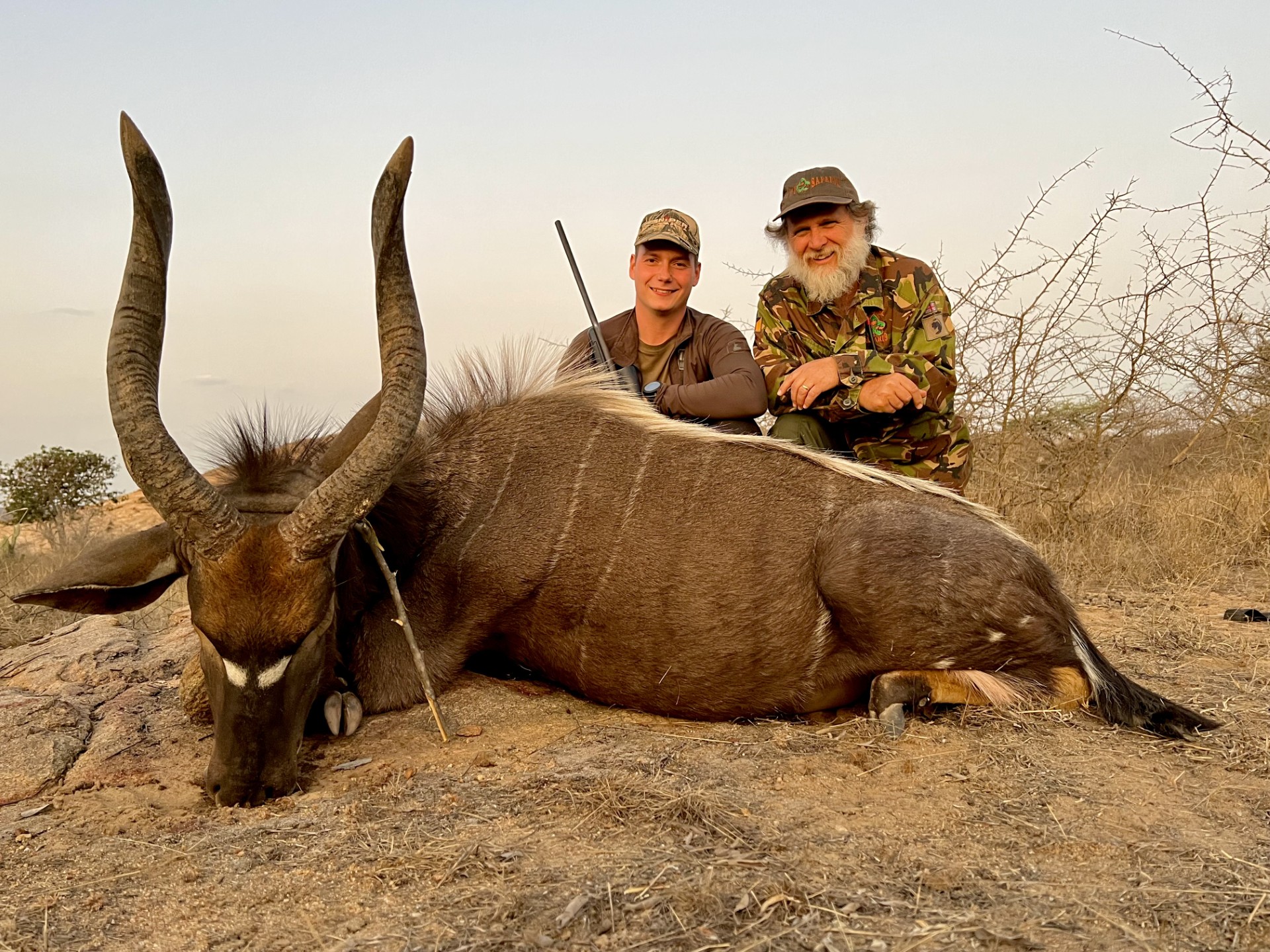
Thor together with Mark behind a nyala bull harvested in 2024. Mark had personally known the animal for nine years before it was taken in the autumn of its life.
From Passion to Perspective
I think most hunters can relate to starting simply because hunting is interesting. That was certainly true for me, but my time in South Africa fundamentally changed my perspective. At Mark Ivy Safaris, I became part of a reality where hunting is not merely a hobby or an interest. It is the very foundation that allows wildlife habitats to exist in the first place.
I saw how farms had been converted from cattle production into hunting properties, and the difference was striking. Where there had once been uniform agricultural use, there was suddenly greater habitat diversity, more species, and a completely different level of biodiversity.
The contrast became even clearer whenever I drove through agricultural areas dominated by potatoes, avocados, or cattle. There, nature had been pushed to its limits, and wildlife was viewed primarily as a competitor.
One experience in particular left a lasting impression. I witnessed a bushveld area being converted into avocado production. Within a short period of time, the landscape changed dramatically and the wildlife disappeared. That was when I realized how simple, and how brutal, the reality can be: If nature does not generate income, it disappears.
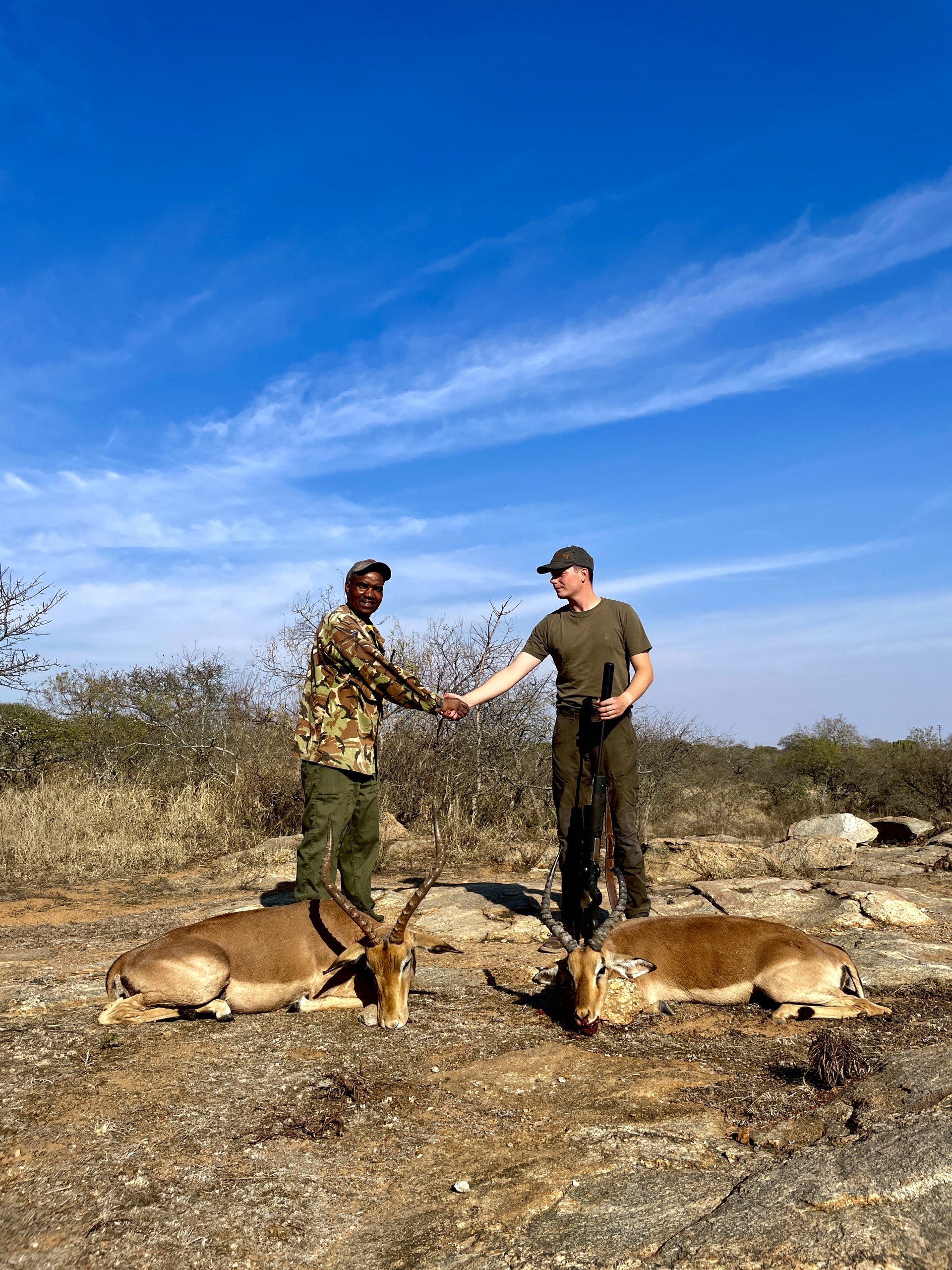
Thor with a pair of management impalas harvested alongside PH David Ramalatso. David has worked with Mark Ivy for many years.
When We Fail to Take Responsibility
In South Africa, game ranches are fenced. These fences are not only there to keep animals inside, but also to separate agricultural land from conservation areas. It is important to understand that people set the boundaries, in South Africa just as elsewhere.
Fences, roads, settlements, agricultural fields, and other infrastructure shape the landscape and limit the natural movement of wildlife. As a result, wildlife populations must be managed. A good example of what can happen when active management is abandoned can be seen in Kruger National Park. Since elephant population control was halted in the 1990s, elephant numbers have increased significantly, and today more than 30,000 elephants live within the park. At first glance, this sounds like a conservation success, and in many ways it is. But such a large population also has consequences.
Elephants are vital ecosystem engineers. They open up landscapes, disperse seeds, and create habitat diversity. However, when their numbers become too high, the effect can be reversed. Large trees disappear as a result of constant browsing and physical damage. High elephant densities can lead to substantial declines in woody vegetation and significant changes in habitat structure that affect numerous other species. The elephants are not the problem. The problem is the loss of balance and the absence of responsible management. And this is precisely where hunting-based wildlife management comes into the picture. If no one is willing to make difficult decisions, entire ecosystems may ultimately suffer.
The Economics Behind It All
One of the things that surprised me most was the enormous role economics plays in conservation. A typical hunting property supports far more people than most outsiders realise: Professional Hunters, trackers, skinners, mechanics, kitchen staff, and maintenance workers. A single property can support many families. If hunting disappears, those jobs disappear as well. The alternative is rarely better. In many cases, the land would revert to cattle farming or other forms of agriculture, which require fewer employees and support far less biodiversity.
There is also an important distinction between hunting tourism and other forms of tourism. A hunter typically spends substantial amounts of money in a short period of time, often far more in a single day than a conventional tourist spends during an entire week. This means that a relatively small number of hunters can generate significant economic value in remote areas where alternative income opportunities are limited. And then there is the meat. Harvested animals provide food for people living and working on the property while also creating business opportunities and income for local butchers and related industries.
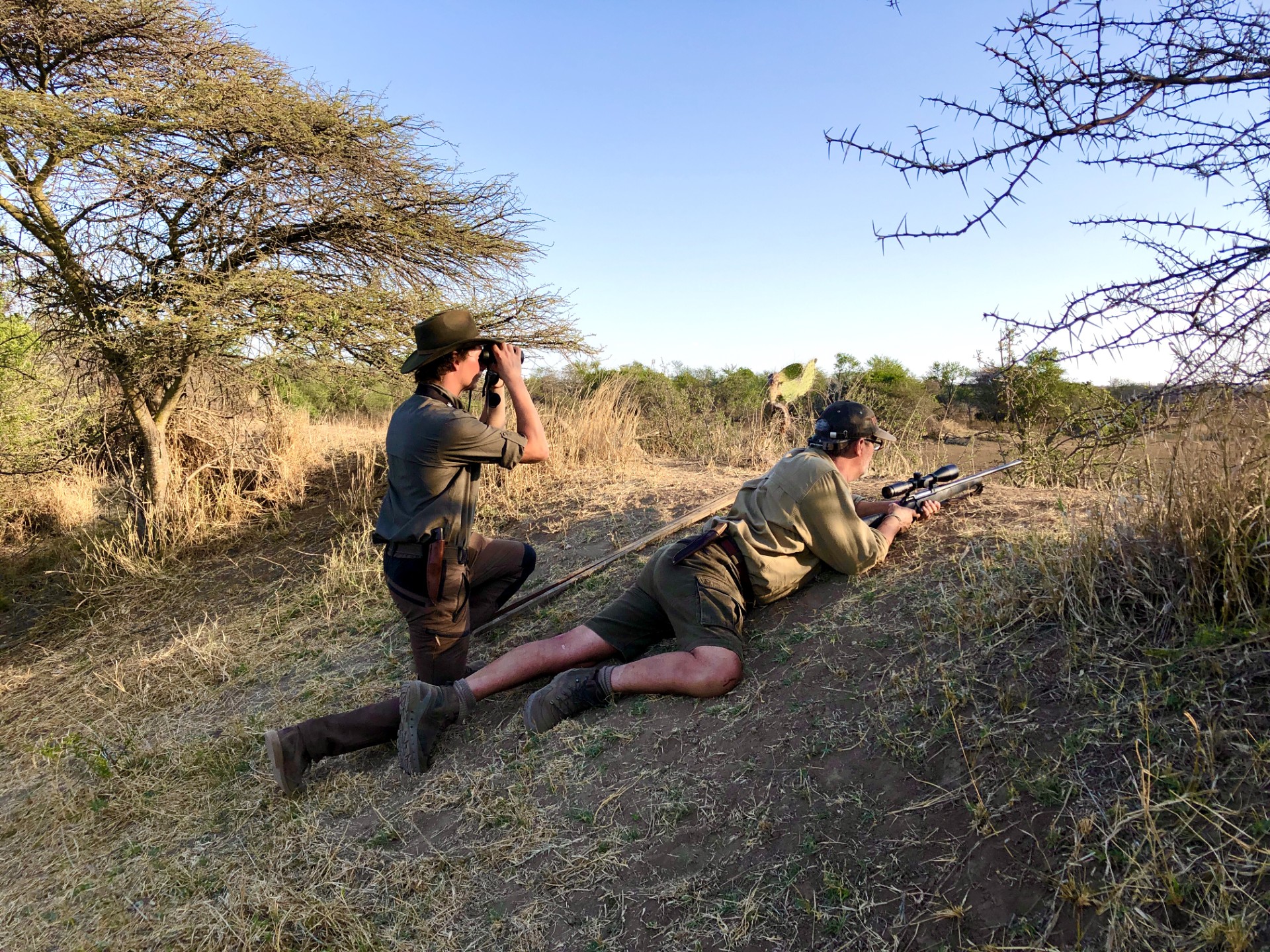
Thor is a qualified Professional Hunter (PH) and holds a guiding licence for Limpopo Province, South Africa. In this photograph, he is guiding his father, Lars, during a waterbuck hunt.
What Is Good Hunting?
For me, good hunting is synonymous with sound wildlife management.
Of course, hunting tourists often seek an unforgettable experience or an impressive trophy. But fundamentally, it is about harvesting the right animal, the animal that fits within the management plan established for the population on that property.
That plan is not random. It is based on knowledge, experience, monitoring, and a thorough understanding of the area.
It is developed by people who dedicate their lives to wildlife, habitat management, and conservation, and whose decisions are guided by those principles.
Above all, wildlife populations should be capable of sustaining themselves.
If all fences were removed tomorrow, the wildlife on a hunting property should ideally be able to survive on its own. If that is not possible, then in my view it is neither true hunting nor sound wildlife management.
We Need to Become Better at Saying It Out Loud
I find that many hunters already understand these realities. The problem is that we are often not very good at communicating them. Whenever I meet people outside the hunting community, I openly say that I hunt. Not to provoke anyone, but because I stand by it. We should not be ashamed. We should explain hunting. Personally, I do not form opinions about topics I have not taken the time to understand. Unfortunately, many people seem willing to do exactly that when it comes to hunting, including people I know well.
That was one of the reasons why, in 2025, I invited two childhood friends who were somewhat critical of hunting to Africa. I have known both of them since primary school, and I wanted them to see how hunting actually works in reality.
One of them was given the opportunity to experience the entire hunting process firsthand, carrying a rifle throughout every stage. From zeroing the rifle at the shooting range, to spotting game, beginning the stalk, placing the rifle on the shooting sticks, and finally pushing the safety catch forward. There was never any pressure. Standing there with the safety off and the crosshairs resting on the animal’s shoulder, the decision was entirely his. He chose to take the shot and harvested an impala. It was a significant experience for both of us. It was a classic hunting scenario that gave him a genuine understanding of what hunting is really about, from field to fork. He will probably never become a hunter himself, but he now sees hunting in a completely different light. And if he returns to Africa, he has told me there are actually several species he would like to hunt. For me, it was a powerful experience, both because I was able to share something that means a great deal to me and because I witnessed how understanding changes when people are allowed to experience reality firsthand.
A Future Built on Unity
One thing that does concern me is the tone hunters sometimes use towards one another. We can be surprisingly harsh, especially on social media, and nobody benefits from that. If hunting is to remain strong in the future, we need to stand together. That does not mean agreeing on everything, but it does mean supporting one another on the fundamentals. Because ultimately, we all share the same goal.
I am fundamentally optimistic. More people, especially women, are entering hunting, and interest in nature appears to be growing. At the same time, I worry that hunting may become so expensive that only a privileged few will have access to it. If that happens, we will lose something important. If hunting is to retain broad public support, it must remain accessible. Hunting should be something that anyone can experience and understand if they wish, including ordinary people. If that is no longer possible, hunting risks becoming even more disconnected from society than it already is for many people today.
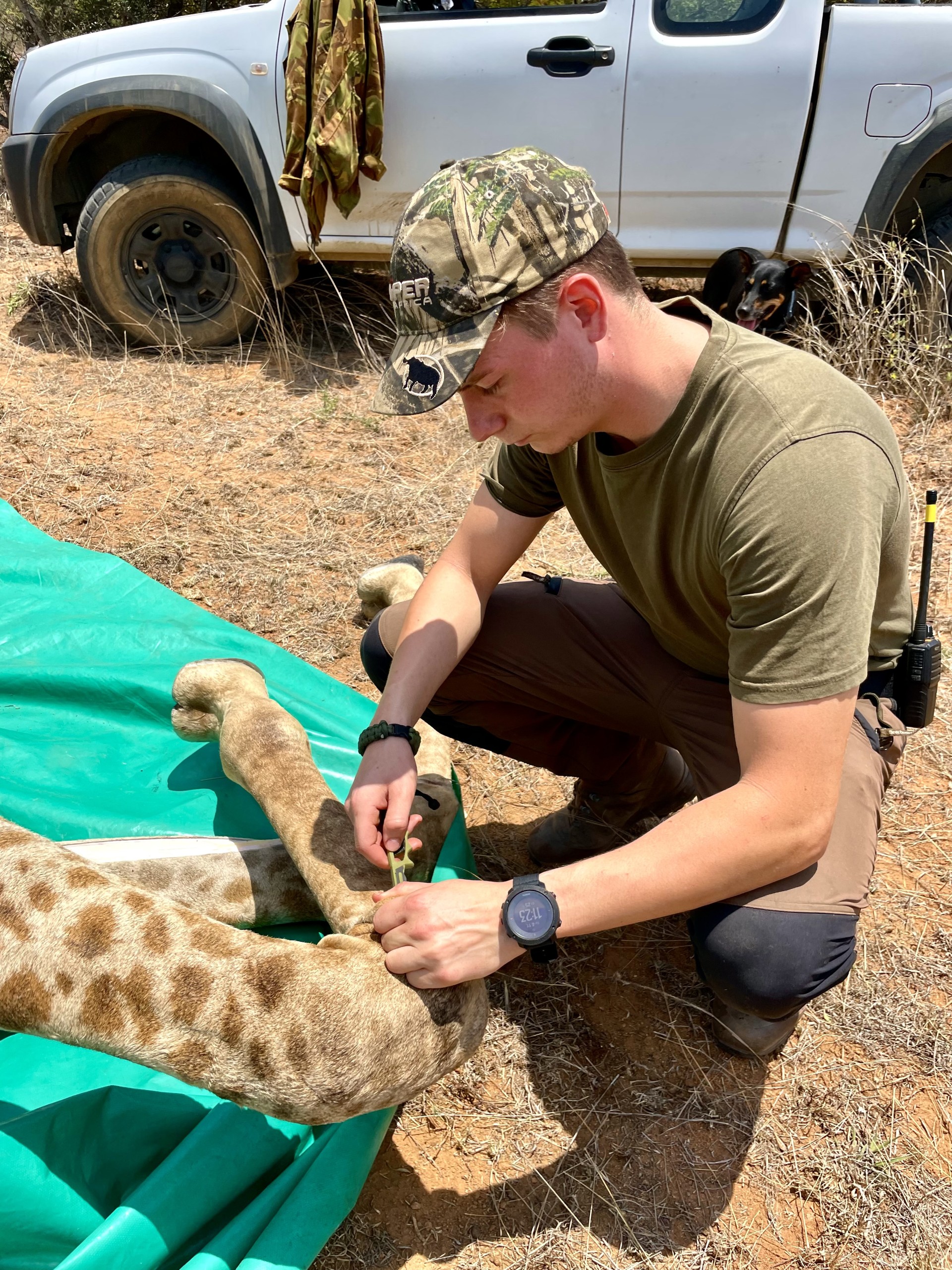
For Thor, the major shift in understanding hunting as conservation came when he travelled to South Africa to work for Mark Ivy Safaris.
In Closing
I have no doubt about it. Hunting helps protect wildlife habitats and creates livelihoods for both people and animals. Hunting gives value to natural landscapes that might otherwise become intensive, biodiversity-poor production areas. We all have a responsibility, both in how we manage hunting and in how we talk about it. As hunters, we know what hunting can achieve.
The only question is whether we are doing enough to show it. Because if we do not take responsibility for telling that story ourselves, someone else will tell it for us. And that story may very well be driven by emotion rather than facts.
For mig har jagt altid været en naturlig del af livet. Jeg tog jagttegn som 15-årig, men allerede før det brugte jeg det meste af min tid ude i naturen.
For me, hunting has always been a natural part of life. I earned my hunting licence at the age of 15, but even before that I spent most of my
Den dødelige sygdom Chronic Wasting Disease (CWD) spreder sig i stigende grad blandt hjortevildtet i den amerikanske stat Montana. Data viser, at sygdommen nu er registreret i omkring en tredjedel
I forbindelse med World Elephant Day 2026 har dyrevelfærdsorganisationen Humane World for Animals (HWA) offentliggjort en meningsmåling, som viser betydelig modstand mod genindførelse af regulering af elefanter som forvaltningsværktøj i
In connection with World Elephant Day 2026, the animal welfare organization Humane World for Animals (HWA) released a public opinion poll showing significant opposition to the reintroduction of elephant population
Malaria er fortsat en af de største sundhedsrisici på jagtrejser til mange af verdens mest fascinerende jagtdestinationer. Det måtte konservator Kim Højland erfare, da en jagtrejse til Liberia udviklede sig