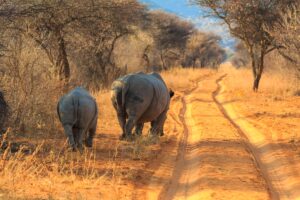
Rhino hunting is a topic often reduced to simple slogans. The debate quickly becomes black and white, but reality is far more complex. Looking across different parts of Africa, a clear pattern emerges: the value of wildlife plays a decisive role in its survival.
In areas where wildlife has little or no real economic value for landowners and local communities, populations have in many cases declined sharply. Developments in countries such as Kenya show how wildlife populations can collapse over time when incentives to conserve them are not strong enough. This is not due to a single factor—habitat loss, human pressure, infrastructure, and poaching all play a role. But it highlights a key point: if local stakeholders do not benefit from wildlife, it is often deprioritized.
The uncomfortable truth, therefore, is that if wildlife does not generate value, it risks disappearing. In several countries in southern Africa, regulated hunting has helped change that equation. Here, rhinos and other large animals are treated as managed resources that can generate income for conservation.
It is important to stress that regulated rhino hunting is not about killing healthy breeding animals. On the contrary, it typically targets older bulls past their prime, or individuals that create problems within the population. These animals can be aggressive and may suppress younger breeding males. Selective removal can therefore, in some cases, be a tool in population management.
At the same time, economics are central. Protecting rhinos is expensive. Anti-poaching units, fencing, monitoring, veterinary care, and land management all require significant resources. Revenue from controlled hunting can help fund these efforts. In practice, the value of one older animal can contribute to the protection of many others.
This income also creates incentives for private landowners and local communities to maintain wildlife rather than convert land to agriculture or livestock. That balance is crucial in many African countries, where land is under constant pressure from other forms of use.
Namibia is often highlighted as an example of this model in practice. Large areas are managed through local conservancies, where income from tourism and hunting flows directly to communities and conservation efforts. The result has been that significant parts of the country remain dedicated to wildlife—and that local people have a direct interest in protecting it.
This does not mean the system is perfect. Regulation, oversight, and transparency are essential for it to work as intended. But it also suggests that a one-sided approach, in which all hunting is rejected, does not necessarily lead to better conservation outcomes.
Ultimately, the question is how to ensure that wildlife has real value for the people who live alongside it every day. Without economic and practical incentives, even the most iconic species risk losing the battle for space.