
Dødelig hjortevildtsygdom breder sig
Den dødelige sygdom Chronic Wasting Disease (CWD) spreder sig i stigende grad blandt hjortevildtet i den amerikanske stat Montana. Data viser, at sygdommen nu er registreret i omkring en tredjedel


In connection with World Elephant Day 2026, the animal welfare organization Humane World for Animals (HWA) released a public opinion poll showing significant opposition to the reintroduction of elephant population control as a wildlife management tool in South Africa. According to the organization, 80% of respondents believe that alternative solutions should be prioritized over population control. In addition, 77% of South Africans surveyed believe tourism would be negatively affected, while 81% believe the country’s international reputation as a wildlife destination would suffer if elephant population control were reinstated.
HWA, formerly known as Humane Society International, is an international organisation that generally opposes hunting and wildlife population control as conservation tools. The campaign is therefore based on the organisation’s preference for non-lethal approaches to elephant management, a perspective that was also reflected in the framing of the survey questions. One could argue that the wording focused heavily on public attitudes towards “culling” while paying far less attention to respondents’ knowledge of the consequences of not managing growing elephant populations.
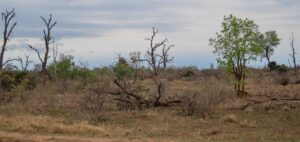
While images of animal population control understandably provoke strong emotions, a growing number of biologists, conservation managers, and local stakeholders warn that expanding elephant populations in certain areas can have serious consequences for vegetation, woodland structure, habitats, and ultimately biodiversity itself. Across southern Africa, the debate is increasingly centered not only on how to protect elephants, but also how to protect entire ecosystems. When elephant densities become excessive, the impacts are felt not only by trees and shrubs but also by birds, small mammals, insects, and other species that depend on the same habitats. The question therefore is not simply whether elephants should be protected, but how nature as a whole should be managed. And is the public receiving sufficient information about the consequences of choosing not to intervene?
HWA highlights measure such as habitat expansion, the creation of wildlife corridors, and the translocation of elephants to other areas as desirable alternatives to population control. While admirable in principle, many wildlife managers would argue that such measures are often impractical on the scale required. The organisation also promotes fertility control as an alternative to culling. Yet relocating elephants demands enormous financial resources and suitable recipient areas, which are already under pressure in many regions. Fertility control is not only highly artificial and logistically complex, but must also be repeated over many years and remains exceptionally difficult to implement across large, free-ranging elephant populations. Meanwhile, the animals continue to impact vegetation and habitats while these solutions are being applied.
Elephants removed through population control do not necessarily go to waste. In several African countries, meat from legally harvested elephants is used as a source of food for local communities, while hides, bone, and other by-products can also be utilized. The debate should therefore not be reduced to a choice between “elephants or culling,” but rather focus on how best to conserve entire ecosystems and ensure that all species sharing those landscapes can thrive.
Is it really the right solution to ignore the challenges created by rapidly growing elephant populations? Or should the public be presented with a more balanced picture of the biological consequences associated with different management options?
If biodiversity declines and landscapes are altered beyond recognition, the long-term question may not be whether elephants are protected, but whether there will be anything left worth protecting at all, and what future tourists will ultimately come to see.
Den dødelige sygdom Chronic Wasting Disease (CWD) spreder sig i stigende grad blandt hjortevildtet i den amerikanske stat Montana. Data viser, at sygdommen nu er registreret i omkring en tredjedel
I forbindelse med World Elephant Day 2026 har dyrevelfærdsorganisationen Humane World for Animals (HWA) offentliggjort en meningsmåling, som viser betydelig modstand mod genindførelse af regulering af elefanter som forvaltningsværktøj i
In connection with World Elephant Day 2026, the animal welfare organization Humane World for Animals (HWA) released a public opinion poll showing significant opposition to the reintroduction of elephant population

Malaria er fortsat en af de største sundhedsrisici på jagtrejser til mange af verdens mest fascinerende jagtdestinationer. Det måtte konservator Kim Højland erfare, da en jagtrejse til Liberia udviklede sig
Debatten om afrikansk jagt ender ofte i en skyttegravskrig mellem tilhængere og modstandere. Enten er jagt løsningen, eller også er den problemet. Erfaringerne fra Zambia peger imidlertid på, at virkeligheden
The debate over African hunting often turns into a trench war between supporters and opponents. Hunting is either portrayed as the solution or as the problem. Experiences from Zambia, however,