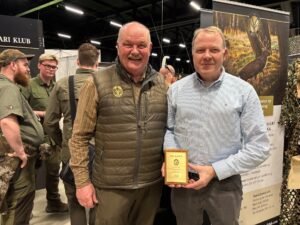
Jens Madsen – NSK Slam 50
Jens Madsen har modtaget en NSK Slam 50 – skal du have godkendt en slam, er deadline for ansøgning d. 15. januar 2027. Du kan se mere om vores slams

Controls that seems Harassment-like could halt trophy imports to the EU
One might ask whether it is really possible that individual customs authorities and officials can manage their own small kingdoms to autocratically go against democratically decided rules and thereby – indirectly – dictate an import ban on trophies to the EU? This seems to be the case, as more and more airlines, shipping companies, and freight companies find it so troublesome that they refuse to transport trophies.
Here is the story of a 110-day trophy transport from Durban to Denmark.
By Thomas Lindy/Nordic Safari Club
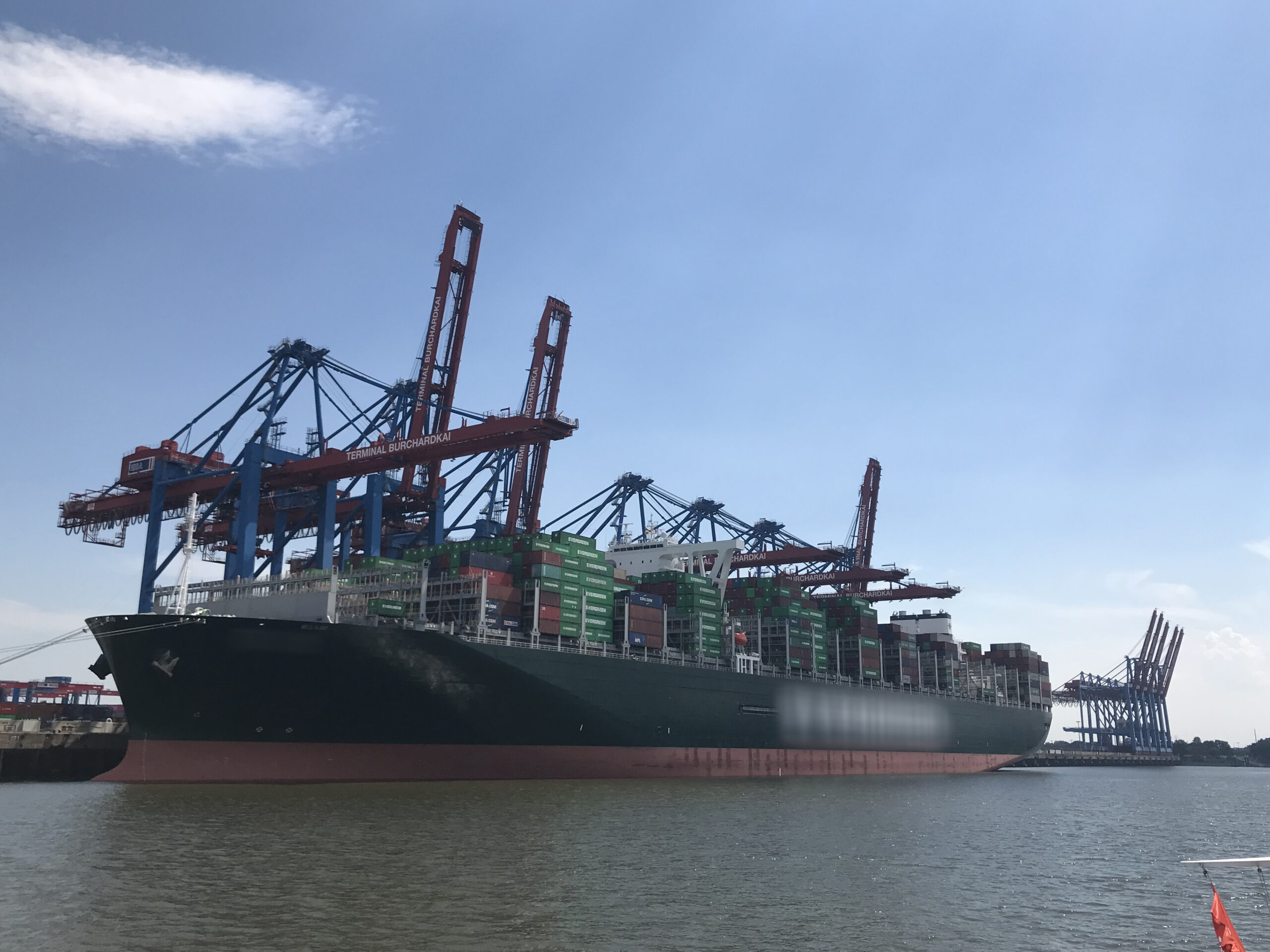
Most hunting trophies sent from a non-EU country to the EU are transported by air or container ship. Upon arrival at the EU’s external border, the cargo must be cleared, which for air transport happens at the final destination, while the external customs border for container transport by ship is Bremerhaven or Rotterdam for containers to Scandinavia.
The example described in this article concerns a container shipment received by customs authorities in Bremerhaven.
Consistent Random Checks
– When a container arrives at the EU’s external border, customs officers have the right to inspect documents and the shipment, but they are not obliged to do so. Only when the shipment arrives in the recipient country – in this case, Denmark – are the Danish authorities obliged to inspect the shipment and check, for example, CITES papers, explains Marlene Jürgensen, who – as owner of the freight company Labrador Cargo – works with the transport of hunting trophies.
But despite the fact that these are only random checks, customs officers at the EU’s outer border always ask to inspect some form of documentation. These are state employees who are very thorough in their labor and put much more effort into their work than they are essentially paid for.
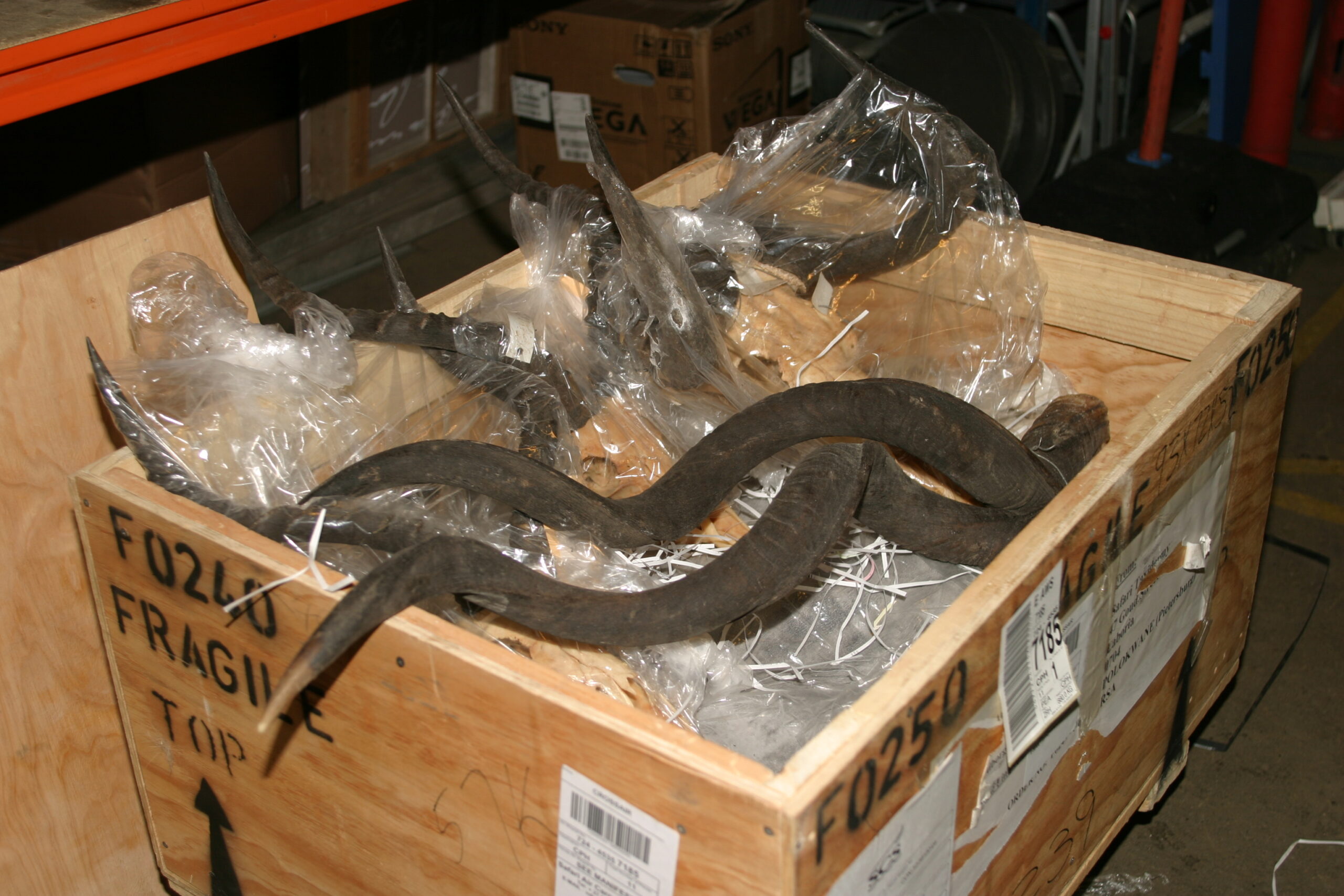
The controversial inspection was carried out without remarks, which has never been the case with any of the freight forwarder’s trophy shipments.
-This is my own opinion, but I am quite sure that customs officers do not perform “this little extra service” with random checks of containers with coffee or t-shirts. I believe it is because some have an attitude towards hunting and hunting trophies, she notes.
– It is striking that all Labrador Cargo’s shipments are selected for inspection, says Marlene and continues:
– We feel that the democratic rules are being overridden, as the consistent “random checks” are carried out without justified suspicion of irregularities. It would be equivalent to authorities consistently performing “random checks” on shipments with Jewish kippah or rainbow-colored flags – It would certainly spark debate!
A Concrete Example
In August 2024, Labrador Cargo handled a shipment of hunting trophies from South Africa. When customs authorities received the container in Bremerhaven, it was – as usual – selected for “random inspection,” and the German customs authorities wanted to inspect EVERYTHING.
Customs officers had a special interest in trophies from blessbuck, which they presumably suspected could be bontebok. A species listed on CITES Appendix II, requiring export papers from CITES. Customs authorities are assumed to have access to competent experts who could have identified the species, but since this did not happen, Labrador Cargo pointed out that they WERE blessbuck. Subsequently, Labrador Cargo – contrary to regulations – was asked to prove that blessbuck does not require CITES papers – something customs officers could have determined with a single lookup.
When a trophy shipment is en route from the sender country to the recipient country, it is under the responsibility of the shipping company, and all communication must therefore go through the shipping company. During the weeks the container was detained in Bremerhaven, there was almost a new message from customs officers in Marlene Jürgensen’s inbox every morning when she arrived at the office.
– It felt as if customs officers had spent the night discussing how sad it is to shoot innocent animals while coming up with new problems to highlight, and the tone used in the emails was far from professional, reports Marlene Jürgensen.
Denied Access by Authorities
If you have ever looked into a box of trophies, you also know that they are packed tightly but in a way that they do not get damaged. Marlene Jürgensen therefore decided to drive from the office in Denmark to the port in Bremerhaven to participate personally when customs officers – without any justified suspicion – decided that all trophies should be taken out of the boxes.
This decision required many emails back and forth through the shipping company’s office, and Marlene also found it necessary to hire a lawyer for the inspection. Through the lawyer, it was possible to limit the inspection to removing the sides of the boxes without each trophy being disassembled and laid out on the floor.
– After much correspondence, it was possible – with the help of a lawyer – to be present at the inspection, but of course, it was not that simple, she explains.
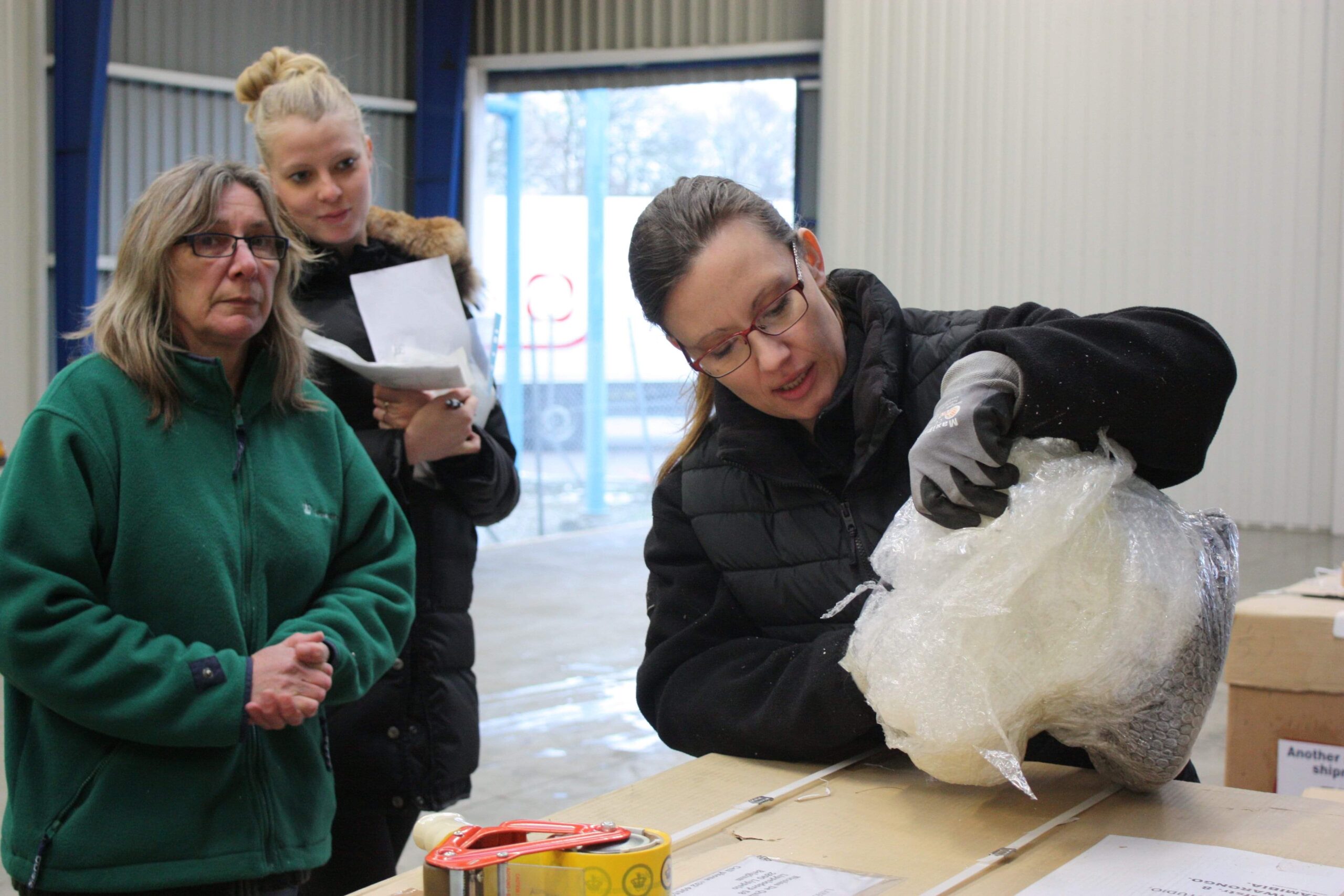
Marlene Jürgensen experiences that trophy forwarding faces more and more challenges.
The handling agent in Bremerhaven and customs set the inspection date for October 8, 2024, at 3:00 PM, so Marlene booked a hotel to be present. Late in the afternoon the day before, on October 7, the authorities informed that Labrador Cargo was not allowed to be present at the inspection. Since the shipment is in transit, customs decided that it is the shipping company and not Labrador Cargo that is responsible for it. The lawyer contested this and entered into a dialogue to allow Marlene Jürgensen to be present at the inspection. The next morning at 9:00 AM, it was announced that the inspection was moved up to 10:00 AM, and Labrador Cargo was still not allowed to be present. Labrador Cargo’s lawyer could not do anything at this point.
– There was nothing to do but wait outside the fence until the inspection was over around 1:00 PM. All the boxes with trophies had been opened, but fortunately, customs officers had not taken the trophies out onto the floor. The dockworkers could tell that there were five customs officers present at the inspection, including the chief of customs, who is otherwise never at the port, Marlene reports.
The dockworkers also said that customs officers walked around with pictures they had printed from Google to amateurishly try to identify whether there were, for example, bontebok antelopes in the shipment.
End of Hunting Trophies to the EU
Customs officers in democratic countries like those in the EU are welcome to have their own opinions on everything from child-rearing and pet ownership to traffic regulation and flight taxes to medicine prices and trophy hunting, but regardless of the individual customs officer’s opinions, these should not be brought to work. Trophy hunting and trophy transport are deeply regulated and subject to various conventions and international laws and must therefore under no circumstances be subjected to harassment-like conditions by the authorities employed to ensure the enforcement of democratically adopted laws.

It took almost 3.5 months to get the trophy shipment from Durban, South Africa to Fredericia, Denmark. There was no justified suspicion of the cargo and it passed inspection without remarks.
It simply cannot be right that I, as a small freight company, have to spend large sums on legal fees and be nervous about subsequently complaining about treatments for fear of reprisals or obstruction of later shipments, the freight forwarder states.
Marlene Jürgensen from Labrador Cargo also points out that several airlines have “put on the green cap” and renounced the possibility of transporting hunting trophies. According to the freight forwarder, this is due – in addition to pressure from fact-resistant animal rights organizations – also in some cases to customs authorities making it so troublesome and costly that it is not profitable to handle the small business that trophy transport is. Both airlines and shipping companies are one by one opting out of the hassle of trophy transport, and soon there will be no more left who will take the “troublesome customers” that hunters are.
I cannot – either in terms of time or money – fight this battle alone, so unless we stand together in the hunting industry and get out of the starting blocks, I fear that importing hunting trophies to the EU may become impossible. Not because there will be a political intervention, but because there simply will be no possibility of getting anyone to transport hunting trophies, she concludes.
Facts about Trophy Transport
The inspection was carried out despite customs officers not being able to inform Labrador Cargo’s lawyer about the reason for their justified suspicion of the shipment and what they expected to find during the inspection. These are two questions that one would expect them to be able to answer if they want to conduct such extensive inspections as in this case. Labrador Cargo has worked 100% professionally with both export and import of hunting trophies for over 15 years, and Marlene Jürgensen knows exactly what she is dealing with. It can also be stated that the inspection was carried out without remarks, which has never been the case with any of the freight forwarder’s trophy shipments. There has never been anything to come after!!
110 Days En Route from Durban to Denmark
15.07.2024: Shipment departs from Durban, South Africa.
04.08.2024: Arrival in Bremerhaven with expected arrival in Fredericia, Denmark on 11.08.2024.
08.08.2024: Both containers selected for document inspection by customs in Bremerhaven. Asked to submit all CITES originals and questioned about several loading lists and invoices.
Until 12.08.2024: Ongoing dialogue where Labrador Cargo answers all questions and documents arrive in Bremerhaven (all scanned except CITES, which are sent in original).
14.08.2024: Both containers required for physical inspection.
15.08.2024: Confirmed by customs in Bremerhaven that inspection is planned.
22.08.2024: Upon request from Labrador Cargo, it is confirmed that there has been no inspection, as customs require the company to arrange the inspection with a local firm. A bit of a challenge that requires help from the shipping company.
26.08.2024: Labrador Cargo receives an email that the inspection had to be interrupted as they could not get the boxes out of the containers.
28.08.2024: Labrador Cargo contacts a new firm at the port, which asks them to waive all claims for damages in writing. This is the first time the freight forwarder has been presented with customs asking for all trophies to be unpacked and laid out individually for inspection.
10.09.2024: Labrador Cargo hires a lawyer for the case.
10.09.2024: Labrador Cargo asks about the physical method but receives no answer.
11.09.2024: Labrador Cargo receives an email from customs stating that they are obliged to present all goods for inspection.
13.09.2024: Labrador Cargo follows up with customs again for an answer on how it should be done.
18.09.2024: Customs asks for authorization and accepts Marlene’s signature.
18.09.2024: With the help of a lawyer, Labrador Cargo manages to get it in writing that it is now sufficient to inspect one box at a time. Labrador Cargo is allowed to be present.
18.09.2024: Handling agent in Bremerhaven and customs set the date for customs inspection to 08.10.2024 at 3:00 PM. They cannot do it before, so Labrador Cargo accepts and books a hotel to be present.
04.10.2024: Labrador Cargo receives an email reminding them to bring safety shoes and a yellow vest for the inspection.
07.10.2024: Late afternoon, Labrador Cargo is informed that they are not allowed to be present at the inspection. Customs have decided that since the shipment is in transit, it is the shipping company and not Labrador Cargo that is responsible.
08.10.2024 at 9:00 AM: Labrador Cargo is informed that the inspection is moved up to 10:00 AM, and they are still not welcome. The lawyer cannot do anything at this point.
08.10.2024: Labrador Cargo waits outside the fence until the inspection is over around 1:00 PM. All boxes have been opened, but they have not taken the trophies out. The dockworker tells that there were 5 customs officers (including the chief of customs), and they walked around with pictures they had printed from Google, including bontebok.
09.10.2024: Labrador Cargo asks for scanned copies of the stamped CITES papers as they are needed to get the boxes out from customs in Denmark.
25.10.2024: Labrador Cargo has received some, but not all CITES papers from Bremerhaven.
26.10.2024: Both containers arrive in Denmark, where several boxes are severely damaged. Some CITES papers are still missing.
28.10.2024: Labrador Cargo receives the last CITES papers and the containers can be released.
Jens Madsen har modtaget en NSK Slam 50 – skal du have godkendt en slam, er deadline for ansøgning d. 15. januar 2027. Du kan se mere om vores slams
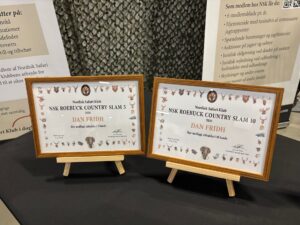
Dan Fridh har modtaget NSK Roebuck Country Slam 5 & 10 – skal du have godkendt en slam, er deadline for ansøgning d. 15. januar 2027. Du kan se mere
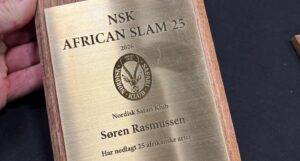
Søren Rasmussen har modtaget en NSK African 25 Slam – skal du have godkendt en slam, er deadline for ansøgning d. 15. januar 2027. Du kan se mere om vores

Efter over et årti med jagtforbud kan Albanien være på vej til igen at tillade jagt – denne gang under nye og strammere regler for bæredygtig forvaltning af vildt, fremgår

Vi lever i et demokrati, hvor alle har ret til at blive hørt. Det er en grundlæggende styrke i vores samfund. Men netop i spørgsmål om natur – og ikke
We live in a democracy where everyone has the right to be heard. That is a fundamental strength of our society. Yet, when it comes to questions of nature—and particularly